

mzyysj.over-blog.com/
18 Janvier 2021

Microsoft has launched a new feature for Excel which it says will revolutionize formulae. Called LAMBDA, the new capability is being made available to Beta users for now, and it introduces the ability to create custom functions using Excel's formula language.
The company points out that Excel formulae are the world's most widely used programming language, and now it has gained the option of defining custom, reusable functions. There's no need to learn a complex programming language, making LAMBDA accessible to all. Handbrake dvd ripper for windows.
Microsoft Excel, spreadsheet application launched in 1985 by the Microsoft Corporation. Excel is a popular spreadsheet system, which organizes data in columns and rows that can be manipulated through formulas that allow the software to perform mathematical functions on the data. Screenshot of Microsoft Excel. © 2010 Microsoft Corporation.
Microsoft Excel has been around since 1982, first introduced as Multiplan, a very popular CP/M (Control Program for Microcomputers), but lost popularity on MS-DOS systems to Lotus 1-2-3. In 1987, Microsoft introduced Excel v2.0 for Windows and by 1988 began to outsell Lotus 1-2-3 and the emerging QuatroPro. Billing is a breeze with a Microsoft invoice template. Easy-to-use and professionally designed, these free invoice templates streamline your administrative time so you can get back to running your business. Excel and Word templates for invoices include basic invoices as well as sales invoices and service invoices. Adobe cs7 buy.
See also:
Writing on the Excel blog, Microsoft's Brian Jones explains: 'Simply put, LAMBDA allows you to define your own custom functions using Excel's formula language. Excel already allows you to define custom functions, but only by writing them in an entirely different language such as JavaScript. In contrast, LAMBDA allows you to define a custom function in Excel's own formula language'.
He goes on to say:
Moreover, one function can call another, so there is no limit to the power you can deploy with a single function call. For folks with a computer science background, you're probably already familiar with the concept of lambdas, and the introduction of LAMBDA makes the Excel formula language Turing Complete..
With LAMBDA, you can take any formula you've built in Excel and wrap it up in a LAMBDA function and give it a name (like 'MYFUNCTION'). Then anywhere in your sheet, you can refer to MYFUNCTION, re-using that custom function throughout your sheet.
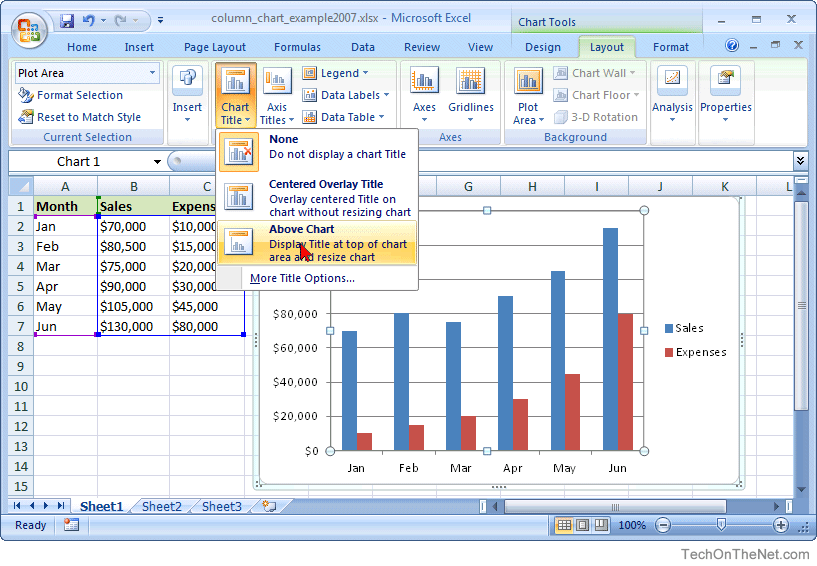
More details and examples can be found on the Excel blog.
Microsoft has not said when this will start to roll out to all Excel users, so if you want to try out the capabilities of LAMBDA for yourself, you can sign up for the Office Insider Program and choose the Beta Channel.


/image%2F6305669%2F20210124%2Fob_9f9620_logic-pro-x-windows-10.jpeg)
/https%3A%2F%2Fassets.over-blog.com%2Ft%2Fcedistic%2Fcamera.png)
/image%2F6305669%2F20210124%2Fob_24e968_windows-hfs-support.jpeg)
/image%2F6305669%2F20210124%2Fob_d9a59d_fastest-external-hard-drive-thunderbol.jpeg)